Why gaps appear
Timber moves with the seasons, so gaps open and close between boards – especially in older pine floors. Gaps let draughts and dust up from the void, so filling them makes a room warmer and cleaner.
Resin filler
Resin filler is mixed with your floor's own sanding dust and worked into the gaps. It's quick and gives a close colour match, but it isn't guaranteed: because wood keeps moving, filler can occasionally work its way out over time. It's also a strong-smelling solvent product, although the smell dies down quickly once the floor is sanded.
Pine slivers
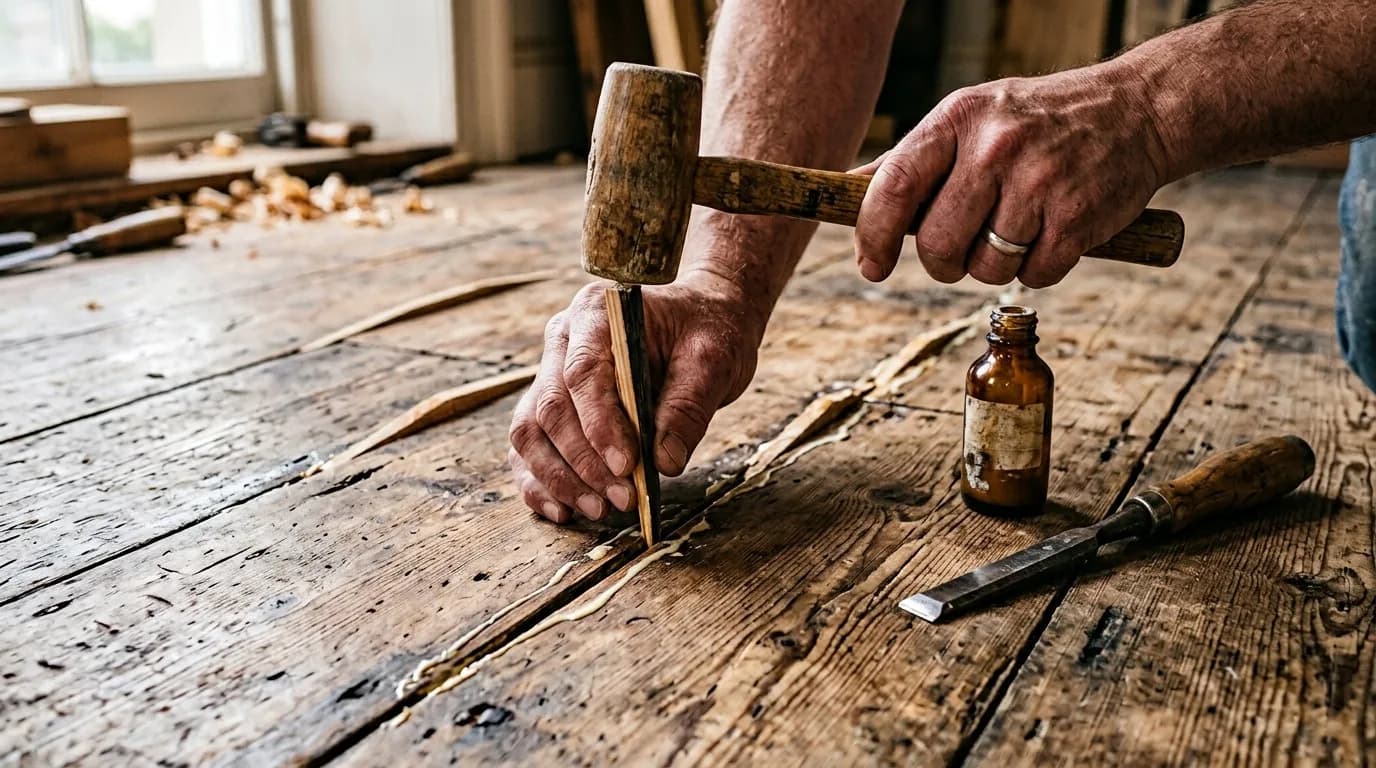
For pine floors we recommend slivers: thin strips of pine glued into the gaps. It's a longer process, but it leaves far smaller gaps to fill, gives a better finish and there is far less chance of filler dropping out.
What about oak?
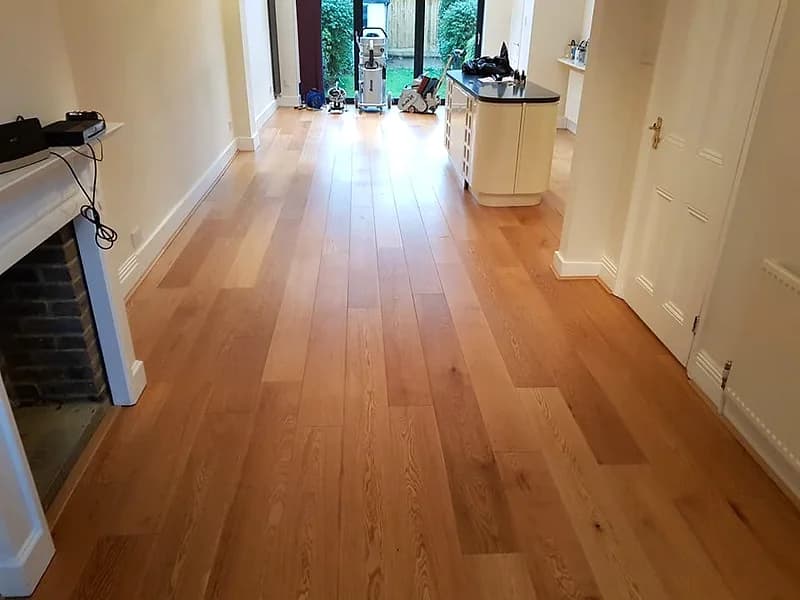
Oak floors and similar hardwoods usually have very tight joints, so filler is very unlikely ever to come out. For most oak floors, resin filler is the right choice.
Got a question about your floor?
Call Darren on 07917 816506 or send a few photos – we're always happy to give honest advice.
Get a free quote